A small room does not need tiny furniture, white paint, or empty corners to feel larger. It needs visual order: a clear path, correctly scaled pieces, useful vertical space, and enough breathing room around the things that matter. The goal is not to hide the room’s size; it is to make every square foot feel intentional.

Measure before imagining
Draw the room to scale and mark doors, windows, outlets, radiators, vents, and swing paths. Measure the narrowest circulation route and every piece you plan to keep. Photos can make furniture look smaller than it is, so check width, depth, height, and delivery access before buying.
Choose one visual anchor
A room feels calmer when one element leads: a sofa, bed, dining table, artwork, or window view. Let supporting pieces remain quieter. Several competing focal points make a compact space feel crowded even when the floor is not full.
Use fewer, better-scaled pieces
Many tiny chairs and tables create more edges and visual noise than one appropriately scaled sofa and a useful side table. Choose pieces based on how the room is used, not on a showroom set. Furniture with visible legs can expose more floor, while a low back can preserve sightlines across the room.
Useful options include a storage ottoman, a set of nesting side tables, and a slim rolling storage cart. Confirm dimensions and load ratings rather than relying on “space-saving” labels.
Protect the main path
Identify the route from the door to the room’s primary destination. Keep it direct and free from projecting corners. Move occasional furniture out of that lane and avoid placing storage where open doors collide. A clean path makes the room feel larger because movement is effortless.
Build storage upward
Vertical storage uses wall height without consuming the center of the room. Extend bookcases upward, add shelves above desks or doors where structurally appropriate, and use hooks inside closets. Keep frequently used items between waist and eye level; reserve high shelves for lightweight seasonal objects.
A wall-mounted shelf system must be attached with hardware suitable for the wall and load. When studs or safe anchors are uncertain, consult a qualified installer.
Let paint support the architecture
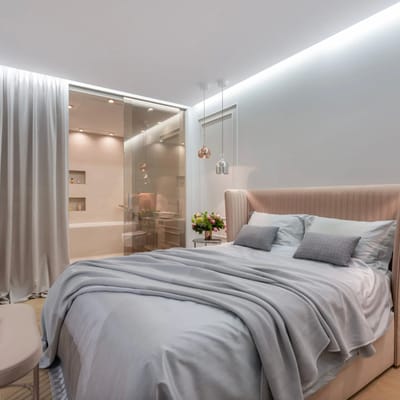
Light colors can make a small bedroom feel more open, while darker shades can create intimacy, as Sherwin-Williams notes. Neither rule is absolute. Test large samples on several walls and observe them throughout the day. Painting trim and walls in related tones can reduce visual chopping, while a deliberate darker alcove can add depth.
Use mirrors with a purpose
A mirror works best when it reflects daylight, an attractive view, or a calm surface. A mirror opposite clutter doubles the clutter. Place it where edges align with nearby furniture and anchor it safely. In narrow rooms, one larger mirror usually looks more intentional than many small mirrored objects.
Control visible clutter
Open storage is useful for beautiful, frequently used objects; closed storage is better for cables, paperwork, supplies, and mixed colors. Give every category a defined limit. If a basket overflows, reduce the contents rather than buying another basket.
Hang curtains to improve proportions
Mount curtain rods higher and wider than the window frame when the wall and hardware allow. Panels should clear most of the glass when open, bringing in more daylight. Choose enough fabric to look full without overwhelming the wall, and keep heaters and vents unobstructed.
A weekend reset
- Remove everything that does not support the room’s current purpose.
- Measure and tape furniture footprints on the floor.
- Place the anchor piece and protect the main path.
- Add task lighting before decorative objects.
- Move storage vertically and conceal visual noise.
- Style only the surfaces that remain easy to clean.
Questions to ask before buying anything
- Does it replace another item or merely join it?
- Can it pass through the door and stairway?
- Does it preserve circulation when fully open?
- Is hidden storage actually accessible?
- Can the material handle daily use?
- Will it still work if the room changes purpose?
A compact room feels generous when it is easy to enter, easy to use, and easy to reset. Measure carefully, choose a clear anchor, preserve the path, and let storage support life instead of becoming the room’s main event.