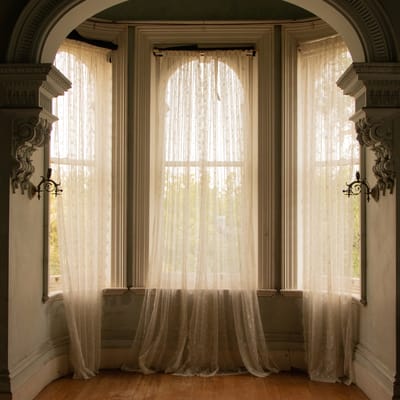
Curtains can make a room look taller, quieter and more finished—or shrink the window and collect dust in a heap. The difference comes from measurement, mounting and fabric behavior, not price.

Measure the wall, not only the glass
Record window width, casing width, distance to adjacent walls, ceiling height and obstructions such as radiators or furniture. Decide where the rod can be safely anchored. Extending the rod beyond the casing lets panels stack off the glass and preserves daylight.
Choose the finished length first
For a clean everyday look, panels can hover just above the floor or lightly touch it. Dramatic pooling requires more fabric and more maintenance. Measure from the planned rod or track position—not from the top of the window—and account for rings, hooks or header style.
Calculate fullness
Two panels whose combined width merely equals the window will look flat when closed. Fullness depends on fabric and heading, but generous width creates folds and better coverage. Check the maker’s finished-width guidance rather than assuming package width equals useful coverage.
A compact laser measure can help with tall walls, while a steel tape remains useful for verifying hardware spacing. Measure twice and write every dimension before ordering.
Pick a mounting system
Decorative rods suit visible hardware and lighter panels. Tracks create a quieter architectural line and work well across wide windows. Tension rods are limited by span and weight. Whatever the system, fasteners must match the wall material and load.
Compare heavy-duty adjustable curtain rods by supported span, center-bracket requirements and projection from the wall. Long rods often need intermediate support, which can affect how freely panels travel.
Layer privacy and light control
Sheers soften daylight but may not provide nighttime privacy. Lined curtains can reduce glare and improve privacy; blackout products vary in actual performance. A double rod or track combines a sheer inner layer with a heavier outer layer.
For bedrooms, compare lined blackout curtains, but verify return policies because color and drape are difficult to judge on-screen. Dark rooms can support sleep, while morning daylight remains useful after waking.
Test fabric in the real room
Hold a large sample vertically near the window at morning, afternoon and night. Thin fabric can change color in backlight. Heavy fabric may overwhelm a small room. Natural fibers can relax, crease or change with humidity, while synthetics behave differently. Read care instructions before committing to a wall of fabric.
Install safely
Check for concealed wiring, pipes and unsuitable wall areas before drilling. Use appropriate anchors and follow hardware instructions. Work from a stable ladder with another adult nearby. Do not improvise with furniture. In homes with children, secure accessible cords using products that meet applicable safety guidance or choose cordless designs.
Steam, train and hem
After hanging, remove wrinkles according to the textile label. Not every fabric tolerates high heat or direct steam. Arrange folds consistently and loosely tie panels for a short training period if appropriate. Hem only after the fabric has hung long enough to settle.
Keep curtains clean
Vacuum gently with an upholstery attachment, especially along hems and headers. Follow the label for washing or dry cleaning. Dust rods and tracks, tighten brackets and inspect sun-exposed areas for weakening. A handheld garment steamer can refresh compatible fabrics, but keep heat away from glass, finishes and skin.
Fix common mistakes
- Rod too low: raises visual clutter and makes the window appear shorter.
- Rod too narrow: blocks glass when panels open.
- Panels too short: creates an accidental gap above the floor.
- Not enough fullness: looks like flat sheets.
- Ignoring furniture: prevents panels from hanging freely.
- Wrong anchors: risks hardware failure.
Shop in the right order
Choose function, mounting height, finished length, width, heading and fabric—in that order. Browse Home Décor products after dimensions are final. Decorative tiebacks and finials should support the design, not distract from incorrect proportions.
Final takeaway
Beautiful curtains are an architectural decision disguised as fabric. Measure the whole wall, mount securely, allow generous fullness and choose a length that looks intentional. A careful installation will make even simple panels feel custom.